





Everywhere you look, sales leaders are telling reps to “build a brand.” But almost no one is explaining what that actually means, or how it ties back to revenue.
Instead, reps are hearing vague advice like:
- “Post every day.”
- “Share a personal story.”
- “You need a hook, a hashtag, a hero’s journey.”
Here’s the problem: Most organizations are treating social selling like influencer marketing. Reps are posting for attention, not alignment. It becomes performative instead of intentional. And in sales, performative content doesn’t move pipeline.
Because personal branding without a clear purpose is just noise.
Your Personal Brand Is Your Reputation (Not Your Aesthetic)
A strong personal brand isn’t just your tone or style, it’s your reputation as a seller. It’s what buyers remember you for, not how often you show up.
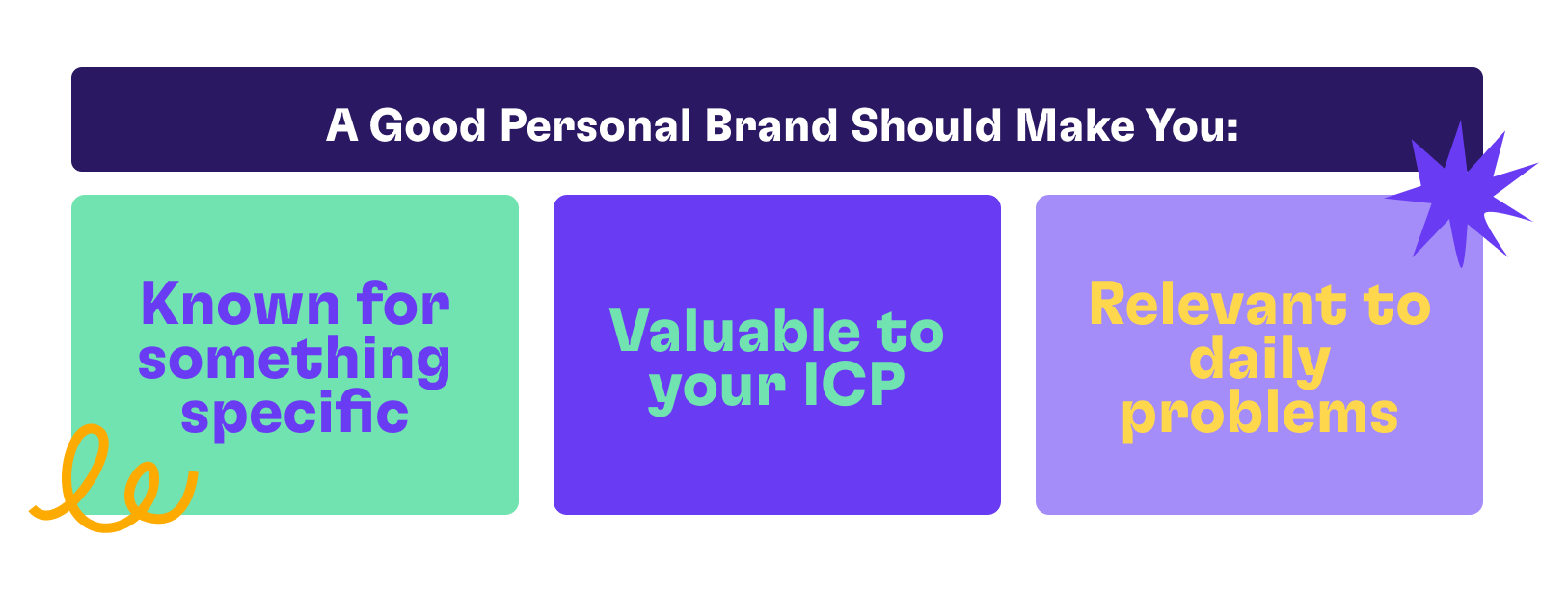
You don’t want people thinking, “Wow, they post a lot.”
You want them thinking, “Wow, they get me.”
That’s the difference between vanity branding and a sales-aligned personal brand.
Brand Is Not Volume, Brand Is Recall
Many sales leaders still believe that brand = frequency. But true brand power is about recall: when your buyers think of a problem, your name is the first one that comes to mind.
Your content is the bridge. It should reflect the problems your buyers face and the solutions you help them unlock.
A simple test: Ask yourself,
“Would my dream buyer find this helpful, insightful, or relatable?”
If the answer is no, skip it.
Your Content Needs to Trigger a Reaction
Your goal isn’t always to push action, it’s to create recognition. The best social sellers use content to make buyers think:
- “This person understands my world.”
- “This is exactly what I’m dealing with.”
- “I trust their perspective.”
Content can be lessons, frameworks, breakdowns, even memes—as long as it ties back to your expertise.
Example: If you sell cybersecurity software to CTOs, they’re probably more technical than you. But a well-timed meme about late-night incident alerts shows you understand their daily reality. That’s connection. That’s recall.
If Your Buyers Can’t Find Your Content, It’s Not Working
Many reps struggle with low impressions, few likes, and zero comments. This typically means two things:
- Your content isn’t aligned with what your buyers want to see, and
- Your buyers probably aren’t seeing your posts at all.
That’s not a “you” problem, it’s a signal to iterate.
Test, Iterate, and Find Your Format
Different formats resonate with different audiences:
- Maybe your videos outperform written posts
- Maybe frameworks and breakdowns get stronger engagement
- Maybe humor and relatable moments build trust faster
Social selling is 80% experimentation and 20% consistency. Once you find what resonates, whether it’s insights, humor, or storytelling—lean into it.
Consistency Keeps You Discoverable
LinkedIn and other platforms reward consistency. Most top social sellers post 3–5 times per week, and some post daily to keep the algorithm warm.
Consistency does three things:
- Makes you more visible
- Makes you more memorable
- Makes you more trusted
Your buyers can’t remember you if they never see you.
What Sales Leaders Should Actually Tell Their Reps
If you lead a sales team, your guidance shouldn’t be:
❌ “Just post more.”
❌ “Tell personal stories.”
❌ “Be inspirational.”
Instead, it should be:
✅ Be helpful - Reps should create content that solves real problems.
✅ Be findable - Help them optimize for visibility and relevance.
✅ Be consistent - Teach them to show up regularly, not randomly.
Because at the end of the day: What you post matters less than why someone remembers you.
Want to Build a Network That Drives Pipeline, Not Just Followers?
If you want to learn how to build a personal brand that fuels real conversations, warm introductions, and revenue, check out GTN University.
Tactical. Trust-first. And available now.


