


Your CRM knows your deals. But it doesn’t know your relationships.
Every seller’s been there: Staring at a list of cold accounts, wondering where to start. Meanwhile, the perfect path is already sitting in your network. The truth? Your network knows more buyers than your CRM ever will. You just haven’t mapped it yet.
CRMs are built for tracking data, and it’s important data, but they aren’t built for tracking relationships. They tell you who’s buying, not who knows who.
Most sellers treat relationships as invisible assets, which means they never show up in reports or forecasts.
Think about it this way: Your CRM shows what you know about your market. Your network shows what your market knows about you.
The Invisible Layers of Your Network
Your network isn’t just one circle, it’s made up of three: direct, indirect, and extended connections.
Direct connections are the people closest to your business: Coworkers, customers, advisors, and investors. They already know you, trust you, and have a vested interest in your success. These are your easiest paths to warm introductions and early-stage deals.
Indirect connections include partners, alumni, and collaborators. They’re adjacent to your success. Your wins may benefit them, but they don’t rely on them. Still, a quick introduction or mention from this group can carry meaningful credibility.
Extended connections are the hidden gems: Friends of friends, 2nd-degree LinkedIn contacts, or people who engage with your content but don’t yet know you directly. They’re often invisible in your CRM, but they may be just one introduction away from your next buyer.
Each layer strengthens the web of opportunity around you. The challenge isn’t building more connections, it’s learning to see the ones you already have.
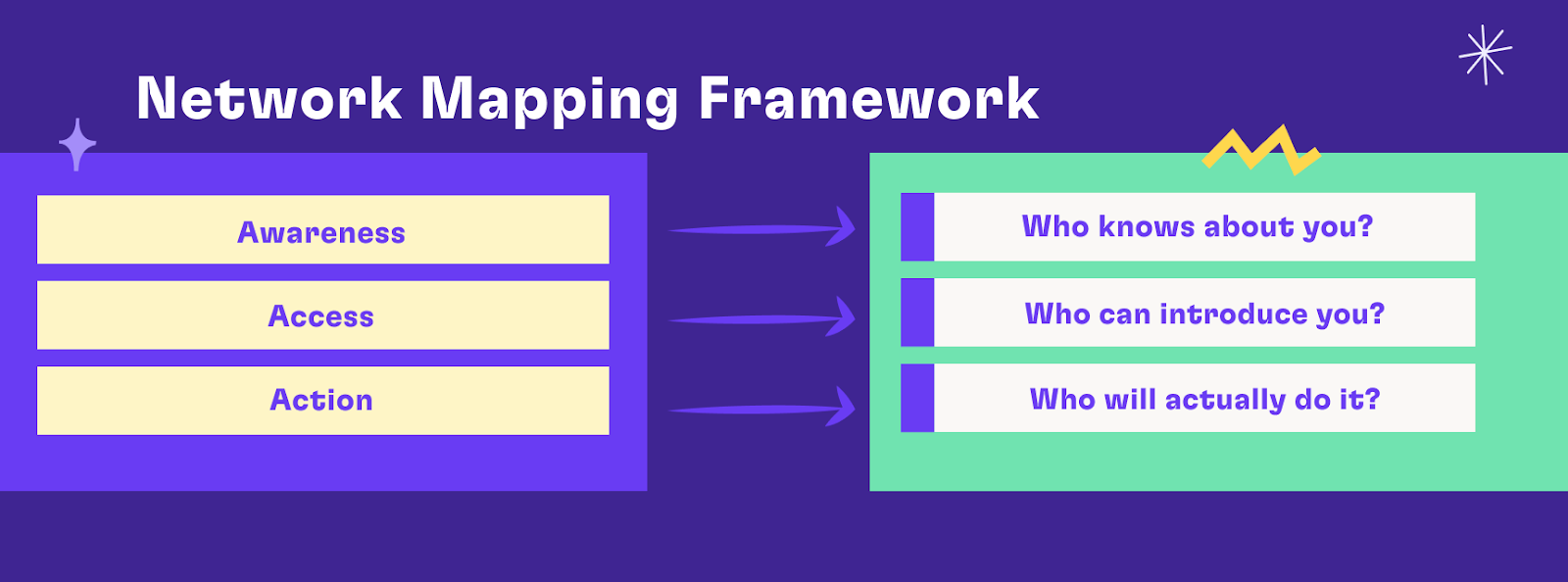
Here’s a mini framework to map out your network:
Awareness → Who knows about you
These are the people who recognize your name or your company. They’ve seen your posts, read your content, or heard about you from someone else. Awareness is the surface layer of your network: broad, visible, and full of potential energy.
Access → Who can introduce you
This is where awareness turns into opportunity. Access means knowing who in your network has a direct line to the people or accounts you want to reach. These connectors are your bridge, they turn “I wish I knew them” into “Let me introduce you.”
Action → Who will actually do it
Not everyone with access will take action. The most valuable connections are the ones willing to hit “send” on that intro email or drop your name in the right Slack thread. They don’t just know someone, they activate the connection.
Most revenue teams underestimate the value of relationships because they can’t measure them. CRMs measure leads and activities, but not how much your buyers trust you.
That gap is where opportunities are lost. Deals stall not because you don’t have accounts to target, but because you don’t know what the right paths to reach them are.
Let’s say you have 50 target accounts. Your network could already know people at 30 of those accounts. Think about how much outreach time that saves.
How to Start Leveraging Your Network (Today)
You don’t need a new tech stack to start building a network-driven pipeline — just a shift in how you use the relationships you already have. Here’s where to start:
- Map your network. Begin with the people already in your orbit: Customers, investors, advisors, and former coworkers. These are the folks most likely to open doors. Ask yourself: Who do they know that I should know? Even one warm intro from this group can shortcut weeks of cold outreach.
- Segment by connection strength. Not all relationships are created equal. Strong ties, people who know you well, are your fastest path to intros. Weak ties, those looser acquaintances, can expand your reach into entirely new circles. The best sellers balance both: strong ties for momentum, weak ties for growth.
- Ask for intros early. Don’t wait until the end of the deal to bring your network in. Warm introductions are most powerful when they spark the first conversation, not the last one. They humanize your outreach, set the tone of trust, and move deals out of the cold-start zone from day one.
- Track relationship signals. Engagement is a clue. Pay attention to who’s liking, commenting, or resharing your posts, or who your customers are shouting out on LinkedIn. Those micro-interactions reveal interest and connection strength, the subtle signals that often lead to your next warm path in.
Bottom line: Your network is already full of revenue signals. You just need to see them, and activate them, before your competitors do.
Warm pipeline doesn’t come from data entry, it comes from human entry.
If you’re ready to see what your network already knows, we’ve made it ridiculously simple to start. Our “Got Intros?” tool gives you three free warm introductions from your existing network. No spreadsheets. No cold outreach. Just proof that your network is your most powerful sales asset.
Stop looking for new leads. Start looking closer.


